HVAC Business Coach
Your HVAC Company Has a Capacity Problem Before It Has a Growth Problem
Maximizing Your Potential
Short answer: An HVAC business coach works on the company behind the service call, not the trade. That means pricing and job profitability, scheduling and dispatch rules, technician accountability, hiring and onboarding, leadership development, lead tracking, systems documentation, and financial management. The goal is a company that gets stronger as it gets larger, rather than one that simply gets busier.
A full schedule can make an HVAC company look healthy from the outside. Every truck is moving, technicians are booked, and the phone keeps ringing.
But busy and profitable are not the same thing.
If each new technician requires more of your attention, every additional truck creates scheduling problems, or increasing sales simply increases payroll and operating stress, growth is exposing weaknesses rather than solving them.
HVAC companies often hit the same wall. The owner knows how to get more work, but the business behind that work hasn’t caught up.
You add another technician, but nobody owns training.
You add another truck, but dispatch becomes harder.
You increase advertising, but nobody tracks which calls actually become profitable jobs.
You hire an office manager, but every difficult decision still comes back to you.
That’s the point where growth can start feeling strangely similar to falling behind.
A good HVAC business coach helps you look at capacity before simply chasing more revenue. Can the team handle another 20 percent in call volume? Do you know which services produce the strongest margins? Is your dispatcher making decisions from a clear system, or from experience stored entirely in one person’s head?
Growth gets much easier when the business is built to carry it.
The Pricing Problem Hiding Inside a Full Schedule
Here’s one of the most frustrating situations in HVAC: you can have more work than you know what to do with and still wonder where the money went.
Usually, the answer is somewhere inside pricing, labor efficiency, overhead, job costing, callbacks, discounting, or a mix of all five.
Maybe labor rates haven’t kept pace with payroll.
Maybe equipment costs moved faster than your pricing.
Maybe your team regularly spends extra hours on installations that were quoted too tightly.
Maybe service calls look profitable until you account for drive time, warranty work, commissions, fuel, office payroll, and the cost of keeping the truck on the road. Wages alone understate it: federal figures put benefits and legally required costs at roughly 30% of private-sector employer compensation costs (opens in a new tab).
Our HVAC coaching work looks specifically at job costing and pricing strategy, technician performance, scheduling, dispatching, workflow, overhead, and waste.
An owner shouldn’t have to wait until the end of the year to discover whether all that activity actually made money.
The goal is to know your numbers well enough that you can answer basic questions quickly:
- Which types of jobs produce the strongest margins?
- Where is labor running over estimate?
- Which technicians need more training or accountability?
- How much overhead must each truck support?
- Are discounts solving a sales problem or creating a profit problem?
- How much cash does the company need before adding another employee or vehicle?
Those answers change the way you make decisions.
Where HVAC Business Coaching Actually Helps
Not refrigerant. Not load calculations. Not installation technique. You already know the trade.
HVAC business coaching focuses on the company behind the service call:
- Pricing and job profitability, understanding what each type of work actually contributes after labor, materials, callbacks, and overhead.
- Scheduling and dispatch, creating rules that help the office use technician time more effectively instead of reacting to whichever customer is loudest.
- Technician accountability, setting expectations around productivity, customer experience, paperwork, follow-up, and performance.
- Hiring and onboarding, building a repeatable process instead of desperately recruiting whenever somebody quits.
- Leadership development, creating managers and team leaders who can make decisions without calling the owner every hour.
- Sales and lead generation, tracking where leads come from, how calls are handled, what gets booked, and which customers are worth acquiring.
- Systems and documentation, getting important processes out of your head and into the company.
- Financial management, keeping a closer eye on margins, cash flow, overhead, and the numbers that influence day-to-day decisions.
- Growth planning, deciding when another truck, technician, service area, or location actually makes financial sense.
- Succession and exit planning, building a company that someone else can operate, manage, or eventually buy.
More broadly, our coaching centers on time management, financial performance, leadership and team development, lead generation, and business systems.
Start your free Business Health Check and see which of those areas is costing your HVAC company the most right now.
Your Dispatch Board Is Telling You More Than You Think
Dispatch is one of those functions that seems tactical until you realize how many financial decisions are hiding inside it.
Which technician gets which call?
How much windshield time are you paying for?
Are your strongest technicians constantly rescuing jobs that should have been assigned differently?
Are emergency calls destroying planned work?
Is one dispatcher holding the entire operation together through memory and instinct?
When dispatch is weak, the cost shows up everywhere. Technicians waste time driving. Customers wait longer. Overtime increases. Jobs get pushed. Office staff spend the day apologizing.
The fix isn’t automatically new software.
Sometimes the business needs clearer service areas, technician skill classifications, call priorities, escalation rules, communication standards, or better capacity planning.
Technology can support those decisions, but first someone has to decide how the company should operate.
That’s the business work.
Who This Is For
Coaching tends to make the most sense for HVAC owners who:
- Are making money but working far too many hours to do it.
- Still spend much of the week running calls, solving scheduling problems, or approving routine decisions.
- Have several technicians but feel like they are managing every employee personally.
- Keep adding revenue without seeing the improvement in profit they expected.
- Know pricing or job costing needs attention but haven’t created a process to fix it.
- Are tired of losing good technicians and starting the hiring process from scratch.
- Want to add trucks, crews, services, or territories without creating more chaos.
- Have an office team but still serve as the final answer to almost every question.
- Want managers who can actually manage.
- Are thinking about retirement, succession, or selling the company within the next 5 to 10 years.
It’s probably not a fit if you only want more leads while leaving pricing, leadership, hiring, accountability, and operations untouched.
More calls poured into a weak system usually create a bigger weak system.
Hiring Another Technician Won’t Fix a Management Problem
The HVAC labor problem is real, but not every staffing problem is a recruiting problem. Demand is genuinely strong: federal projections put HVAC employment growth at 11 percent through 2035, with about 40,600 openings a year and a median annual wage of $61,010 as of May 2025 (opens in a new tab). You are competing for those technicians against every other contractor in the county.
Sometimes the company can hire people just fine. It just can’t keep them.
A new technician walks in and finds inconsistent training, unclear expectations, different rules depending on who is working, weak communication between the office and field, and an owner who is too busy to provide feedback until something goes wrong.
Six months later, you’re hiring again.
Before blaming the labor market, look at what happens after somebody accepts the job.
Is there a written onboarding process?
Does the technician know what good performance looks like at 30, 60, and 90 days?
Who trains them?
Who reviews their numbers?
Who talks to them when performance slips?
What does advancement look like?
Our coaching covers hiring, onboarding, training systems, employee expectations, leadership, and team development.
The point isn’t to make management complicated. It’s to make expectations clear enough that good employees know how to succeed.
How We Work
We start by looking at the company as a business, not simply as a collection of jobs on a dispatch board.
AMB Performance Group offers a free Business Health Check as an entry point for evaluating how the company is performing. From there, coaching runs one-on-one or in a group program, focused on long-term and short-term goals.
The work depends on where the company is getting stuck.
If profit is weak, pricing and job costing may come first.
If the owner is overwhelmed, delegation, management structure, and systems may take priority.
If technicians are inconsistent, expectations and accountability may need work before another round of hiring.
If growth is the goal, we look at whether the financial, operational, and leadership structure can support it.
You don’t fix ten areas at once. You identify the few issues creating the most pressure, put clear actions behind them, measure what happens, and keep moving.
The Goal Is Not More Trucks. It’s a Better Business.
HVAC owners naturally measure growth in visible ways.
More trucks.
More technicians.
More service areas.
More revenue.
Those can all be signs of progress, but only if the company gets stronger as it gets larger.
If adding a truck gives you another employee to supervise personally, growth increased your workload.
If adding revenue stretches cash flow, growth increased your financial pressure.
If opening another territory means you’re now driving between two offices solving the same problems, growth duplicated the problem.
A better question is: what can this company handle without you personally holding it together?
That’s the question owners eventually have to answer if they want real scale, more freedom, succession, or a sale.
The owners we work with are usually making the same transition: stronger systems, better use of employees, productivity, stable finances, strategic time, growth planning, and eventually building a company that can continue without constant owner involvement.
Who You’d Be Working With
AMB Performance Group brings operating experience from outside the coaching industry. That background spans sales, operations, logistics, finance, human resources, marketing, change management, and leadership development.
Arif Boysan brings 25 years of corporate leadership experience, including responsibility for a large organization and thousands of employees. His background includes sales growth, profit improvement, technology, logistics, human resources, and organizational change.
Matt Wilson also brings 25 years of experience, including two decades in management roles, and has used AMB’s business coaching framework in his own business. You can see how that plays out in our client case studies.
The point isn’t to teach you how to diagnose an air handler. It’s to bring business, management, financial, and leadership thinking to the part of the HVAC company that technical training never covered.
We work with owners across Palm Beach County, Martin County, and South Florida, in person or virtually, including West Palm Beach and Stuart.
Coaching for Other Trades and Service Businesses
We work with owner-led companies across the trades, including plumbing, electrical, roofing, pest control, and general contracting. Standards and training for HVAC specifically come from bodies like the Air Conditioning Contractors of America (opens in a new tab), but the dispatch, pricing, and owner-dependency problems look much the same across every one of these trades.
Build an HVAC Company That Doesn’t Need You for Every Decision
You already know HVAC. The harder question is whether the company can price jobs, dispatch technicians, train employees, solve problems, serve customers, and make money without pulling you into every decision.
That’s the work an HVAC business coach helps you tackle.
If you’re tired of being the technician, dispatcher, manager, salesperson, problem solver, and owner all at once, book a free discovery call with AMB Performance Group. We’ll look at where the company is getting stuck, where your time and profit are disappearing, and what needs to change for the business to become stronger without requiring more of you.
Contact AMB Performance Group to answer any of your questions about business coaching, or set up an appointment.
Group Coaching
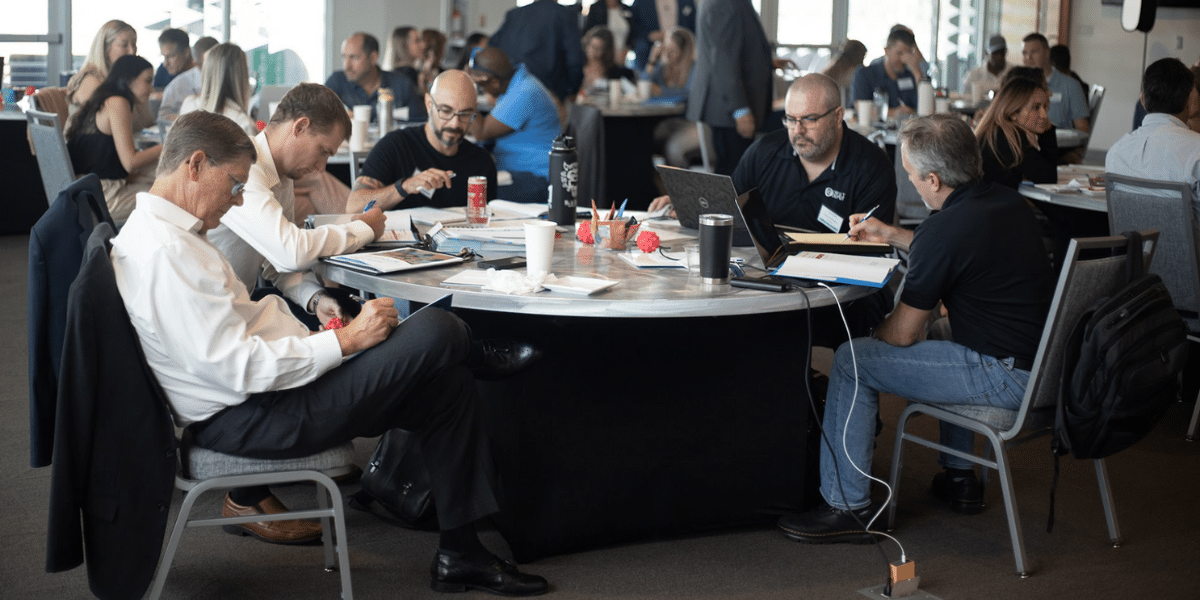
AMB Performance Group Coaching allows you to gain great knowledge, expand your education and gain a greater understanding of accountability.
1 on 1 Business Coaching
1 on 1 Coaching focuses solely on you. An accelerated program to help develop and execute long and short-term goals.
Is Your HVAC Business Running You?
Ask most HVAC owners when they’ll fix the business side of the company, and the answer is usually “when things slow down.” Then summer hits, the phones light up, technicians are booked solid, a truck goes down, someone calls out, and the owner is right back in the middle of everything. When the slow season finally arrives, the focus shifts to keeping crews busy and cash moving.
That cycle is exactly why working with an HVAC business coach can make a difference. AMB Performance Group works with HVAC contractors and service business owners who know the trade but want a company that runs with better systems, stronger leadership, healthier margins, and less dependence on them personally. The current AMB HVAC program focuses on operations, profitability, team development, lead generation, and long-term planning rather than teaching technical HVAC work.
We don’t hand you a generic small-business checklist. We look at the company you actually run: your technicians, trucks, calls, pricing, margins, schedule, office team, capacity, and goals.
Book a free discovery call.

Frequently Asked Questions
-
Q
What does an HVAC business coach do?
AAn HVAC business coach works with the owner on the business side of the company. That can include pricing, profitability, hiring, leadership, scheduling, systems, sales, marketing, time management, accountability, and long-term planning. The coach isn’t there to teach HVAC repair. The work is about building a stronger company around the technical service you already know how to provide.
-
Q
How do I know if my HVAC company needs coaching?
ALook at how many routine decisions still require you personally. If technicians, dispatchers, office staff, customers, vendors, and managers constantly need your input, the business may be too dependent on you. Other warning signs include weak margins despite strong sales, constant hiring, inconsistent processes, long workweeks, and growth that seems to create more problems instead of solving them.
-
Q
Can an HVAC business coach help with pricing?
AYes. Pricing discussions often start with understanding labor, equipment, overhead, job costing, discounts, callbacks, technician productivity, and the margin required to operate the company. Coaching can help you build a better decision-making process around those numbers. The goal is not simply to charge more. It is to know why you charge what you charge and whether the work is producing the return the business needs.
-
Q
Can HVAC business coaching help me hire technicians?
AHVAC business coaching can help with the business systems around hiring. That may include clearer job descriptions, recruiting processes, onboarding, training expectations, performance measurements, management communication, and retention. Hiring someone is only the first step. The company also needs a repeatable way to turn a new employee into a productive team member.
-
Q
What if my biggest problem is keeping technicians?
ARetention often requires looking beyond compensation alone. Employees also react to management quality, communication, scheduling, expectations, training, workload, career opportunities, and whether the workplace feels organized. Coaching helps the owner examine the management environment surrounding the technician instead of treating every resignation as an isolated hiring problem.
-
Q
Can coaching help with dispatch and scheduling?
AYes. Dispatch and scheduling affect technician productivity, customer experience, travel time, overtime, capacity, and profitability. A coach can help you identify where decisions are inconsistent and create clearer processes around routing, technician assignments, priorities, communication, and accountability. The goal is to reduce the amount of daily improvisation required to keep the board moving.
-
Q
Do I need a large HVAC company to benefit from coaching?
ANo. We work with businesses ranging from solo contractors and one-truck operations to companies with multiple teams and office staff. The problems change with size, but owner dependency can exist at every stage. For a smaller company, fixing systems early can prevent the owner from building a larger company that still depends entirely on them.
-
Q
Can an HVAC business coach help me grow to multiple trucks?
AYes, but the first question should be whether the current business is ready for another truck. Growth requires more than enough calls to keep someone busy. You also need cash, hiring capacity, training, dispatch support, pricing, equipment, management, and enough profitable work to support the additional overhead. Coaching helps you evaluate those pieces before expansion creates unnecessary pressure.
-
Q
What is the difference between an HVAC business coach and a consultant?
AA consultant is often brought in to analyze or solve a specific issue. A coach typically works with the owner over time, helping them identify priorities, make decisions, take action, measure progress, and stay accountable. For an HVAC owner trying to change how the company operates, follow-through often matters just as much as knowing what should change.
-
Q
Can an HVAC business coach help with sales and marketing?
AYes, particularly with the business processes behind marketing. That can include understanding lead sources, tracking calls, improving booking processes, customer follow-up, reputation, retention, and measuring what marketing is producing. Business development and lead generation are part of our HVAC coaching work.
-
Q
Is HVAC business coaching useful if my company is already profitable?
AOften, that is when the questions get more interesting. A profitable owner may want to reduce working hours, develop managers, improve margins, add locations, create more predictable systems, or prepare the business for succession. We work with plenty of established owners whose priorities have shifted from survival to leadership development, strategic growth, financial planning, and building a company that can operate beyond the owner.
-
Q
Can coaching help me prepare to sell or retire from my HVAC business?
AYes. A company that relies heavily on the owner can be difficult to transfer. Preparing for succession or a future sale usually means documenting systems, developing leadership, strengthening financial performance, reducing owner dependency, and making sure important customer and operational knowledge exists inside the company rather than only inside the owner’s head. Succession and exit planning is part of our HVAC coaching work.